From Scheduled to Smart: A Better Way to Maintain Municipal Buildings— Lessons from the AMM 2026
Apr 28, 2026
What if your buildings could tell you exactly when they need maintenance? At AMM, Greenwave showed how.
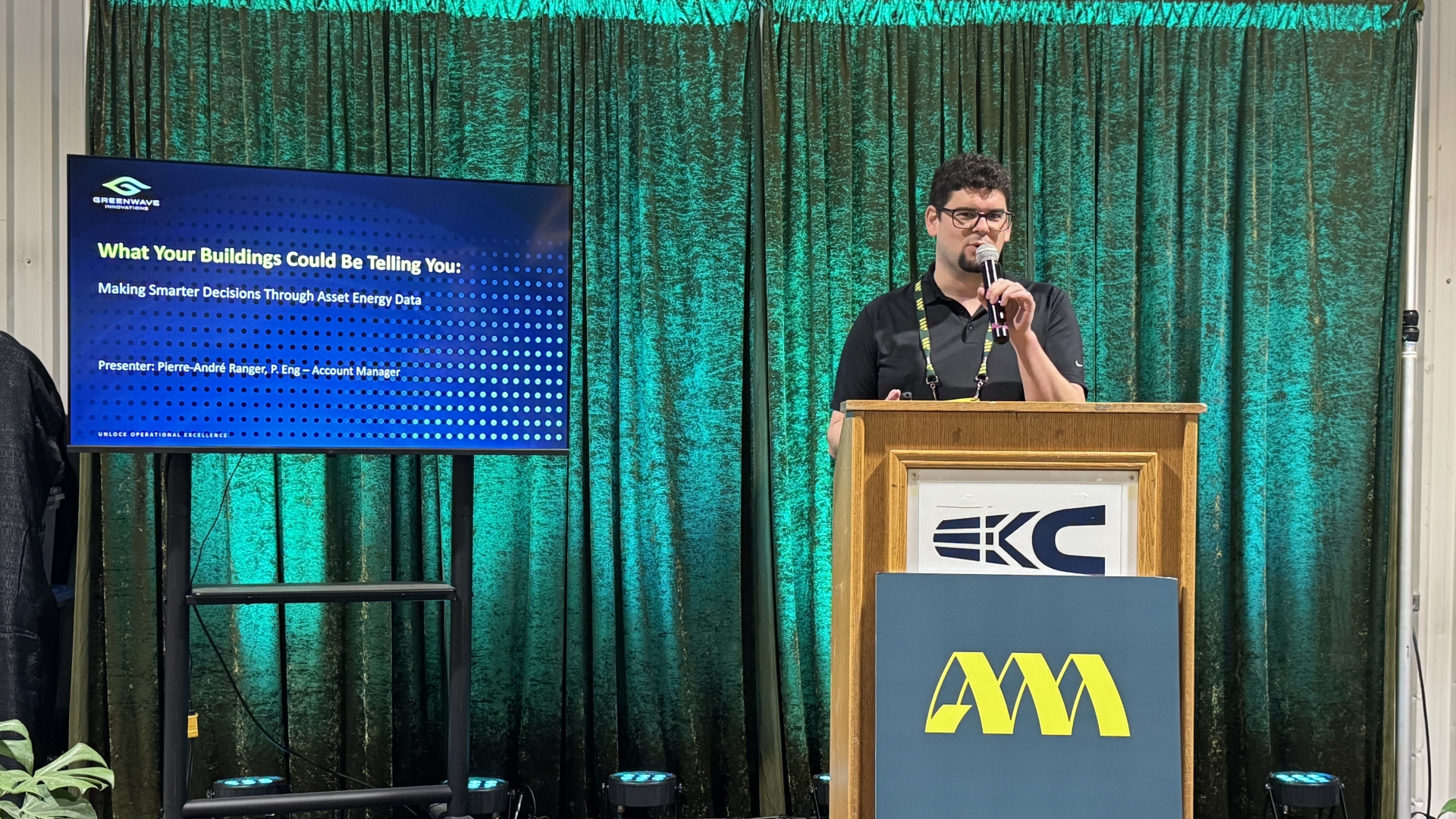
In April 2026, the Greenwave Innovations team made the trip to Brandon, Manitoba for the Association of Manitoba Municipalities (AMM) Spring Convention & Trade Show — one of the province's most important gatherings of municipal leaders, Mayors, Reeves, and CAOs.
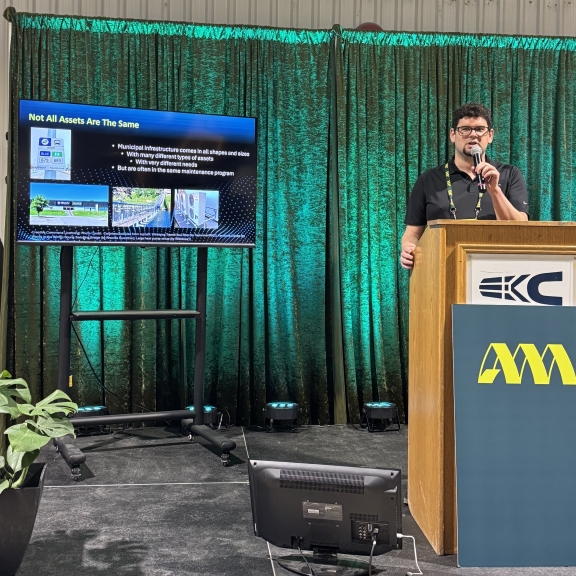
Alongside its booth presence at Keystone Centre, Greenwave had the opportunity to take the stage. Pierre-André Ranger, P.Eng., Account Executive and Greenwave Energy Advisor, delivered a session titled "What Your Buildings Are Trying to Tell You: Making Smarter Decisions Through Asset Energy Data" — and the message resonated.
Here's a look at what was covered.
Your Car Gets Better Maintenance Than Your Buildings
Think about how you maintain a vehicle. Oil changes aren't done every January 1st — they're triggered by mileage, or by a sensor that tells you when the oil actually needs changing. Tire rotations happen at 12,000 km. Bearing grease follows a run-hour schedule. Your car's dashboard is constantly telling you what it needs, and you respond accordingly.
Now think about how most municipalities maintain their buildings.
For many facilities, HVAC systems, pumps, fans, and compressors are serviced on a fixed calendar — regardless of how many hours they've actually run, how hard they've been working, or what their current condition is. It's the equivalent of changing your oil every six months whether you've driven 200 km or 20,000 km.
The question Pierre-André posed to the audience was a simple one: Why do we accept better data from our cars than from our buildings?
Not All Assets Are the Same — So Why Treat Them That Way?
Municipal infrastructure is enormously varied. Roads, bridges, arenas, water treatment plants, recreation centres, administrative buildings — each has different components, different usage patterns, and different maintenance needs. Grouping them all into the same scheduled maintenance program isn't just inefficient. It can be costly.
Some assets, like roads, naturally lend themselves to seasonal maintenance rhythms. Others — fixed infrastructure without moving parts — need little more than regular inspection. But mechanical systems like HVAC equipment, compressors, and pumps are a different story. These assets degrade based on how much they run and how hard they work, not what month it is.
For these systems, the goal should never be making maintenance planning simple. The goal should be spending as little as necessary while ensuring equipment lasts as long as possible.
Performance-Based Maintenance: What It Looks Like in Practice
Data-driven, or performance-based, maintenance flips the traditional model. Instead of pre-scheduling service visits on a calendar, maintenance tasks are prioritized based on actual run-hour data and real-time equipment health metrics.
Greenwave's sub-monitoring hardware collects minute-by-minute electrical data at the equipment level — tracking metrics like kilowatt-hours, power factor, and harmonic distortion. Power factor, in particular, is a telling signal: it measures how efficiently a piece of equipment is converting electrical energy into useful work. When power factor starts to decline, it's often an early sign that something needs attention.
What does this look like on the ground?
- Maintenance is triggered when equipment actually needs it — not when the calendar says so
- After a service activity is logged, the system measures whether equipment performance improved — validating the work and refining future intervals
- Declining health metrics flag equipment for capital planning before it fails, giving operators time to evaluate replacement options rather than scrambling in an emergency
- Real-time alerts catch failures early — a compressor short-cycling at 2 a.m. triggers a notification, not a 7 a.m. surprise
The presentation also highlighted how the same data framework applies to water and gas leak detection — instant alerts that can prevent business disruption and costly insurance claims.
The Bigger Picture: Smarter Capital Planning
Perhaps the most compelling shift that performance-based maintenance enables is in capital planning. When every major piece of equipment has a documented health score, run-hour history, and energy consumption profile, capital prioritization stops being a guessing game.
Municipalities can identify which assets are trending toward failure, compare the cost of continued maintenance versus replacement, and make defensible, data-backed decisions about where to invest — rather than reacting to whatever breaks first.

Greenwave at AMM: A Strong Start to the Manitoba Conversation
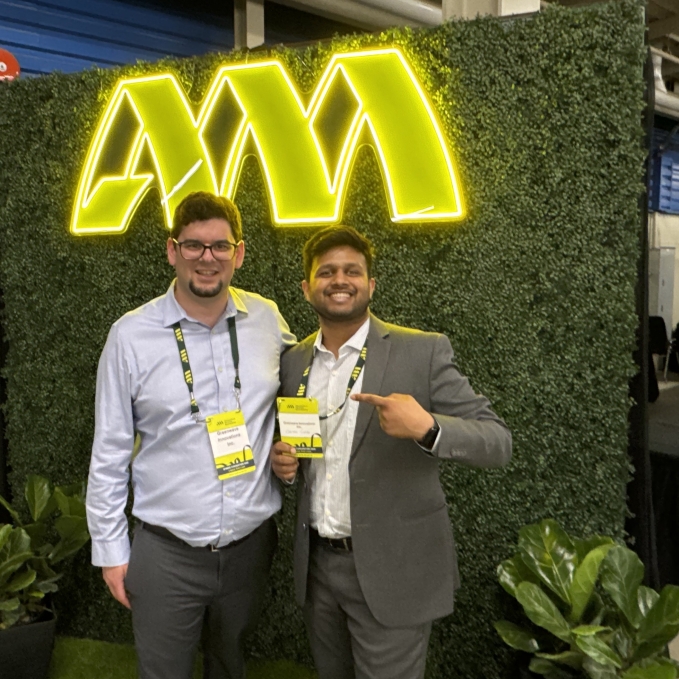
Beyond the session itself, the Greenwave's Chetan Goyal and Pierre-André Ranger spent three days at Booth 11 connecting with municipal leaders from across Manitoba — discussing everything from utility bill management and portfolio reporting to building sub-monitoring and energy optimization.
The message that emerged from those conversations was consistent: municipalities are managing significant infrastructure with limited staff and tightening budgets. Better data doesn't just improve maintenance outcomes — it gives facility teams the confidence to make decisions and the evidence to defend them.
Greenwave Innovations looks forward to continuing these conversations with Manitoba municipalities in the months ahead.
To learn more about how Greenwave's Greensense platform supports performance-based maintenance and energy intelligence, visit greenwaveinnovations.ca or reach out at info@greenwaveinnovations.ca.