
From Data to Decision: How Greenwave Innovations Is Redefining Energy Management
Jul 13, 2020
Greenwave Innovations isn't just another energy company — we're a long-term partner helping commercial and industrial facilities unlock hidden value through real-time data, predictive intelligence, and measurable results.
Every kilowatt-hour wasted is a decision that didn't have to happen.
That belief is at the core of why Greenwave Innovations was founded. Sparked by ongoing conversations around energy consumption and the untapped potential of smarter decision-making, founders Mike Tate, Dean Clark, and Jared Lukomski set out to build something the market was missing: not an audit firm that hands you a report and disappears, but a true energy management partner that stays, measures, and continuously uncovers value.
Continuous Intelligence, Not One-Time Audits
Unlike traditional energy audits that deliver static, point-in-time snapshots, Greenwave provides continuous, real-time intelligence. By integrating directly and non-intrusively with a building's existing infrastructure, Greenwave captures precise measurements of electricity, water, and natural gas at the asset level — enabling facility operators to move from reactive maintenance to a proactive, performance-based approach.
"Workplaces are shifting from reactive maintenance to being more productive and predictive," says co-founder Dean Clark. "Pick your area of interest, and we'll uncover a layer of value."
Turning Complexity Into Action
At the core of Greenwave's value is its ability to translate complex data into decisions operators can actually act on. Clients gain clear visibility into inefficiencies, identify optimization opportunities, and receive real-time alerts within minutes of anomalies occurring. The outcome: lower utility costs, stronger operational reliability, predictive maintenance, and confidence that critical systems are performing as intended.
Results That Prove the Model
The impact is measurable — and it's named. At The Keg Steakhouse + Bar in Regina, Greenwave reduced electrical consumption and carbon footprint by 25% in a 5,000–6,000 sq ft commercial space. At Melfort's Northern Lights Palace Pool and Arena, the platform delivered an additional 30% reduction in electrical usage, while simultaneously identifying water leaks responsible for 1.6 million gallons of annual waste and approximately $2,500 per month in avoidable costs.
These aren't isolated wins. They reflect what happens when data replaces guesswork — consistently, across every engagement.
Built to Scale Across Sectors
Greenwave's solutions grow with its clients. From individual commercial buildings to large industrial facilities, municipal portfolios, and entire communities, the platform is designed for breadth without sacrificing depth. Strategic partnerships with SaskPower, SaskEnergy, SaskTel, and SGI have strengthened Greenwave's ability to deliver integrated, province-wide impact — including a 16-school initiative with Saskatchewan's Ministry of Education that is helping build a new generation of efficiency-minded leaders.
Making Sustainability Visible
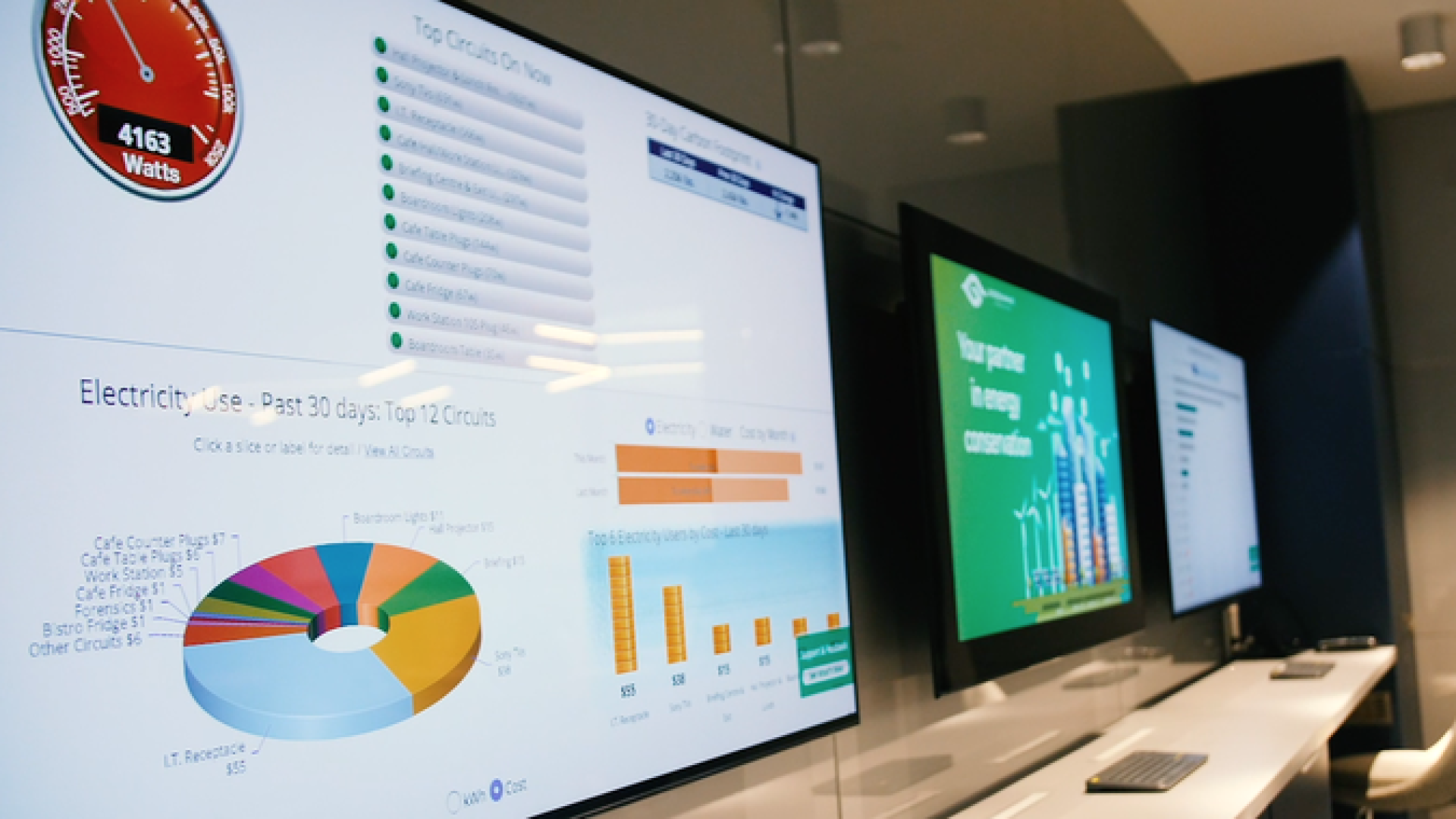
Data is only as powerful as the decisions it enables — and the stories it helps tell. Greenwave's public engagement dashboards transform live consumption data, environmental metrics, and energy performance indicators into compelling visual narratives. Whether the audience is tenants, executives, investors, or the general public, these dashboards give clients the tools to communicate their sustainability commitment with credibility and clarity.
A Mission That Scales
As buildings grow more complex and expectations around efficiency continue to rise, Greenwave remains focused on one outcome: turning data into meaningful action. By combining engineering expertise, advanced analytics, and a long-term collaborative approach, Greenwave helps organizations reduce costs, improve performance, and contribute to a more sustainable future — one building at a time.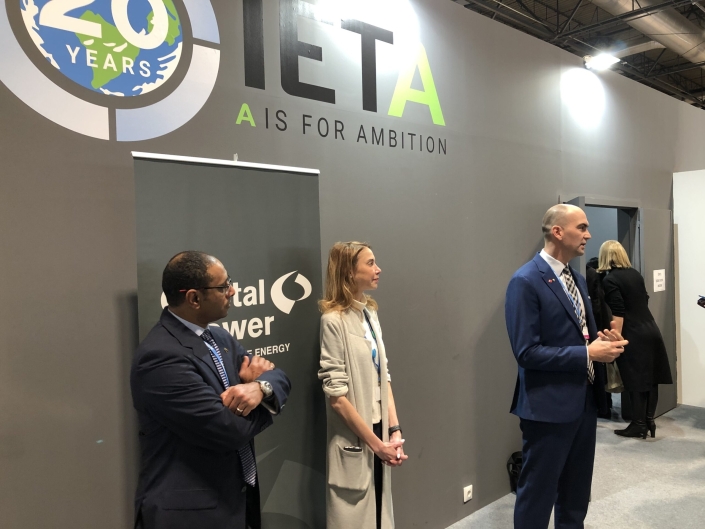
Dean Clark speaking at COP25 – UN Climate Change Convention in Madrid (2019).
Source:
This article was originally published by Innovation Saskatchewan.